Altcoin Portfolio Risk
Altcoins look diversified but usually move as one bet. Check your real altcoin portfolio risk across correlation, liquidity, and drawdown in about 60 seconds. Free, no wallet connection.
An altcoin portfolio feels diversified. Ten tickers, several narratives, a bit of everything. In reality most altcoins move as one bet, and when the market turns they fall together. Crypto Clarity AI shows what your altcoin bag is really risking in about 60 seconds, free, with no wallet connection.
The short answer
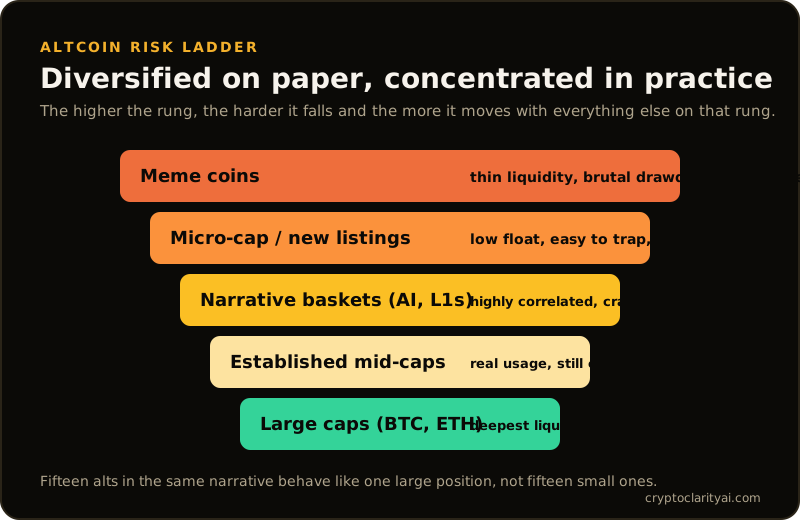
The danger with altcoins is not that any single one is bad. It is that they are correlated, illiquid, and prone to deep drawdowns at the same time. A portfolio of ten alts in the same cycle narrative is closer to one concentrated bet than to ten independent ones. The tool measures your effective number of bets after correlation, your liquidity depth, and your drawdown exposure, then rolls it into one risk score.
Why coin count does not equal diversification
Diversification only works when assets do not move together. Most altcoins do move together, especially within a narrative like layer-1s, DeFi, or gaming tokens. So the honest question is not how many coins you hold, but how many independent bets you actually have. For a lot of altcoin portfolios the answer is two or three, no matter how long the list looks.
The three risks stacked into altcoins
- Correlation: alts in the same narrative rise and fall together, so they do not cushion each other in a drawdown.
- Liquidity: smaller caps are hard to exit at size without moving the price against you, which turns a paper loss into a real one when you finally sell.
- Drawdown history: many alts have fallen 80 to 90 percent in past cycles and never fully recovered, so the downside is not symmetric with the upside.
Worked examples
A narrative-stacked bag. 15 percent BTC and 85 percent across eight layer-1 altcoins. It looks like nine positions. Because the eight alts are tightly correlated, effective diversification is low and a layer-1 selloff hits nearly the whole portfolio. High correlation and concentration risk.
A satellite approach. 45 percent BTC, 20 percent ETH, 20 percent stablecoins, 15 percent split across three uncorrelated alts. Here the alts are a satellite around a liquid core with a cash buffer. The tool scores this far lower on risk because the core absorbs the shocks.
A meme-heavy bag. 60 percent across four meme coins, 25 percent SOL, 15 percent stablecoins. Meme coins combine thin liquidity, brutal drawdown history, and correlation with each other and with SOL. Even with a stable buffer, this scores as very high risk, and the tool flags liquidity as the first thing that breaks.
A micro-cap moonshot bag. 30 percent BTC, 70 percent across low-cap tokens. The upside story is real, but so is the chance that several positions become nearly impossible to exit at the same time. The tool flags liquidity and drawdown as the dominant risks.
How Crypto Clarity AI evaluates altcoins
Every altcoin position is scored on its own liquidity, market cap, drawdown history, and correlation with the rest of your holdings, then those roll up into your concentration and correlation dimensions. That is why the tool can tell a genuinely diversified altcoin satellite apart from a bag that just looks diversified.
What your free analysis shows
The free demo shows your altcoin risk read and your headline score. The full report opens (free, sponsor-supported): your full correlation map, your effective number of independent bets, per-position liquidity and drawdown flags, and a prioritized plan to cut the riskiest exposure. Free to use, supported by clearly labeled sponsors.
Related pages
Frequently asked questions
- Are altcoins riskier than Bitcoin?
- Generally yes. Altcoins carry thinner liquidity, deeper drawdowns, and higher correlation with each other, so a broad altcoin selloff hits most of them at once. They can outperform in a rally, but a portfolio of altcoins concentrates risk that a Bitcoin core would spread out.
- Is a portfolio of many altcoins diversified?
- Usually not as much as it looks. Most altcoins are highly correlated, especially within the same narrative, so ten alts often behave like two or three independent bets. True diversification comes from uncorrelated assets, not from a longer list of tickers.
- How much of my portfolio should be altcoins?
- There is no single right answer, but many holders keep altcoins as a satellite around a Bitcoin and Ethereum core rather than the core itself. The tool shows your altcoin weight, your effective number of independent bets after correlation, and how that affects your risk score.
- What makes an altcoin high risk?
- Thin liquidity that makes exiting hard, a deep drawdown history, tight correlation with the rest of your bag, and small market cap. Meme coins and micro caps score highest because they combine all of these. The tool flags each factor per position.
- How do I check my altcoin portfolio risk for free?
- Enter your holdings in the demo and get a free risk score across all 12 dimensions in about 60 seconds, with no wallet connection or signup. The full breakdown and fix-it plan are free to use, supported by clearly labeled sponsors.
See what your altcoin bag is really risking in about 60 seconds.
Score your portfolio across all 12 dimensions in about 60 seconds. The full breakdown, every risk flag, and your fix-it plan are free to use, supported by clearly labeled sponsors. Prefer no ads? lifetime access removes them all.
No wallet connection. No exchange login. free risk check available. Lifetime access unlocks the complete report.
Crypto Clarity AI is an educational risk-analysis tool, not financial advice. Nothing on this page is a recommendation to buy, sell, or hold any asset. Crypto is highly volatile and you can lose money. Figures shown are illustrative examples, not predictions. Always do your own research.
