Crypto Portfolio Rebalancing Calculator
Free crypto portfolio rebalancing calculator. See how far your holdings have drifted from target and the exact trades to get back on plan, in about 60 seconds.
A rebalancing calculator shows you two things: how far your crypto portfolio has drifted from the plan you set, and the exact trades to get it back. Winners grow into oversized bets, and a portfolio you built to be balanced quietly becomes concentrated. Crypto Clarity AI measures that drift and your resulting risk in about 60 seconds, free, with no wallet connection.
The short answer
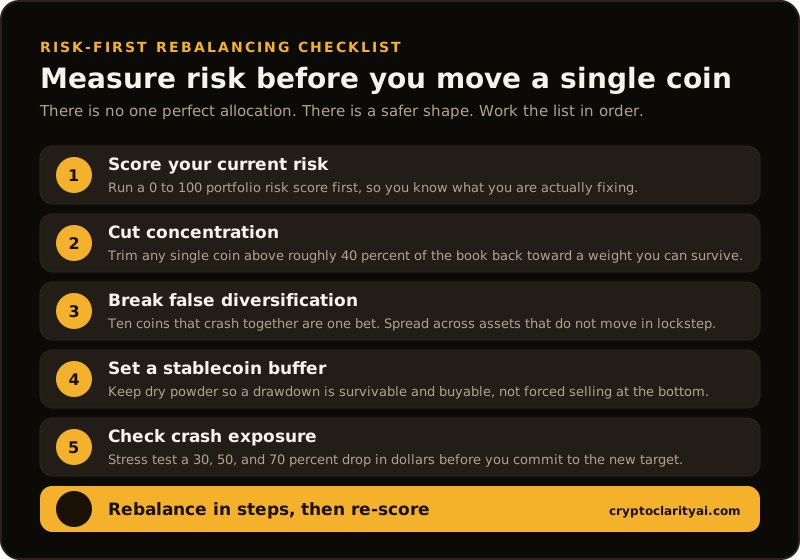
You picked target weights for a reason. Then the market moved. The coin that ran turned a 20 percent position into a 40 percent position, and now most of your risk sits in one place you never intended. Rebalancing is how you sell a slice of what grew, top up what lagged, and return to the risk level you actually chose.
Enter your current holdings and your target allocation, and the calculator reports the drift on each position plus the specific adjustments to restore the plan.
Why drift is a risk problem, not just a tidiness problem
Drift is how concentration sneaks in. Nobody decides to put half their portfolio in one coin. It happens because that coin outran everything else and they never trimmed. By the time it feels obvious, the position is large, the entry looks expensive to sell, and a single drawdown does real damage. Rebalancing on a rule, rather than on emotion, is what keeps that from happening.
Worked examples
A drifted majors portfolio. Suppose a 40,000 dollar book with a target of 50 percent BTC, 25 percent ETH, 25 percent SOL. SOL ran hard and is now 45 percent (18,000 dollars), with BTC down to 35 percent (14,000 dollars) and ETH at 20 percent (8,000 dollars). To get back to target the calculator lays out the trades: sell about 8,000 dollars of SOL to bring it to 10,000 dollars, buy about 6,000 dollars of BTC to reach 20,000 dollars, and buy about 2,000 dollars of ETH to reach 10,000 dollars. That is a 20 point trim on the position that quietly became the biggest bet.
A winner that became a concentration bet. Say a 20,000 dollar book, target 60 percent BTC and 40 percent stablecoins. BTC ran and is now 75 percent (15,000 dollars) against 5,000 dollars in stables. The plan is intact in spirit, but risk has crept up. The fix is to sell about 3,000 dollars of BTC down to 12,000 dollars and hold 8,000 dollars in stablecoins, which restores the 60 percent core you chose.
An altcoin bag that needs pruning. Suppose a 10,000 dollar book with a target of 10 percent each (1,000 dollars) across four alts plus a BTC and ETH core. Two alts pumped to 2,500 dollars each while two bled to 400 dollars each, so the split is now lopsided. Rebalancing trims about 1,500 dollars off each winner and decides whether the two laggards still earn their place before topping them back up. The calculator quantifies each move in dollars.
Meme-coin drift. A meme position bought as a 5 percent flyer (say 500 dollars in a 10,000 dollar book) went 10x and is now worth 5,000 dollars, roughly a third of a book that has grown to 15,000 dollars. That is no longer a flyer, it is the main bet, sitting in the most fragile asset class you hold. The calculator flags it as the top priority to trim and shows the dollar amount that pulls it back to a satellite-sized position.
How Crypto Clarity AI is different
A spreadsheet can show drift. It cannot tell you which drift matters for risk. Because Crypto Clarity AI also scores concentration, correlation, and liquidity, it ranks your rebalancing trades by how much they actually reduce risk, not just by which number is furthest from target.
What your free analysis shows
The free demo shows your overall drift and headline risk read. The full report opens (free, sponsor-supported): your full per-position drift, the prioritized rebalancing trades ranked by risk impact, and the before-and-after on your 12-dimension score. Free to use, supported by clearly labeled sponsors.
Related tools
Frequently asked questions
- What does a crypto rebalancing calculator do?
- It compares your current allocation to your target allocation, measures how far each position has drifted, and shows the specific buy and sell adjustments needed to bring the portfolio back to plan. It turns a vague sense that you are off target into exact numbers.
- How often should I rebalance a crypto portfolio?
- Most long-term holders rebalance on a schedule such as quarterly, or when any position drifts more than a set band, for example 5 to 10 percentage points from its target. Rebalancing too often racks up fees and taxable events, while never rebalancing lets winners quietly become concentration risk.
- Does rebalancing reduce risk?
- Yes, indirectly. Rebalancing trims positions that have grown into oversized bets and tops up under-weight ones, which keeps concentration and correlation in check. The calculator shows how your risk score changes as drift grows.
- Do I need to connect my wallet to rebalance?
- No. You enter your current holdings and your target allocation manually. There is no wallet connection or exchange login. The calculator shows the drift and the suggested trades; you place them yourself on your own exchange.
- What is portfolio drift?
- Drift is the gap between where your allocation is now and where you wanted it to be. When one coin outruns the rest, it takes up a larger share than you intended, so your actual risk no longer matches your plan. Drift is how a balanced portfolio quietly turns into a concentrated one.
See how far your portfolio has drifted, and the trades to fix it.
Score your portfolio across all 12 dimensions in about 60 seconds. The full breakdown, every risk flag, and your fix-it plan are free to use, supported by clearly labeled sponsors. Prefer no ads? lifetime access removes them all.
No wallet connection. No exchange login. free risk check available. Lifetime access unlocks the complete report.
Crypto Clarity AI is an educational risk-analysis tool, not financial advice. Nothing on this page is a recommendation to buy, sell, or hold any asset. Crypto is highly volatile and you can lose money. Figures shown are illustrative examples, not predictions. Always do your own research.
