Crypto Portfolio Concentration Calculator
Free crypto portfolio concentration calculator. See how much of your portfolio sits in one coin or one correlated cluster, and your true concentration risk, in about 60 seconds.
Concentration is the single most common reason a crypto portfolio blows up. A concentration calculator shows you how much of your money is really riding on one coin, or one correlated group of coins, so a single bad move does not take out half your stack. Crypto Clarity AI measures your true concentration in about 60 seconds, free, with no wallet connection.
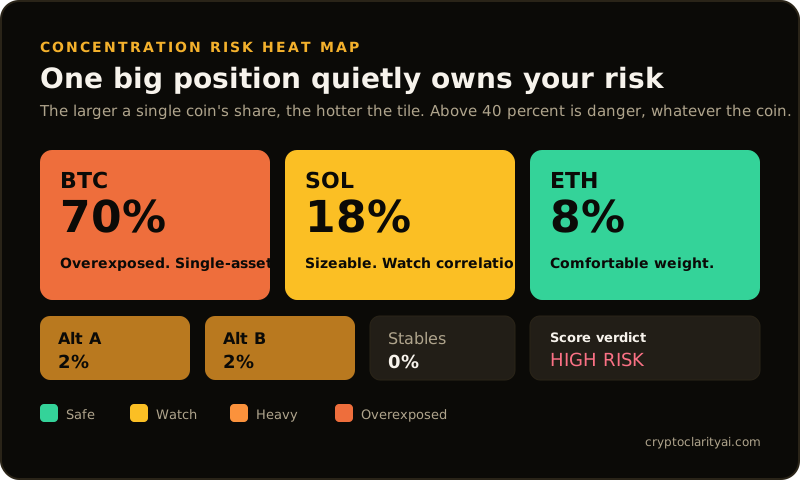
The short answer
Concentration risk is not about how many coins you own. It is about how much of your outcome depends on a small number of bets. You can hold twelve tokens and still be dangerously concentrated if they all belong to the same narrative and fall together.
The calculator reports your largest single-position weight, the share held by your top three, and, more importantly, your effective diversification after correlation is taken into account. That last number is the one most people have never seen.
Why coin count lies to you
Owning ten tickers feels diversified. But if eight of them are layer-1 alts that rally and crash together, your portfolio behaves like two or three bets, not ten. True diversification comes from holding assets whose prices are not chained together. The concentration calculator groups correlated assets into clusters and shows how many independent positions you actually hold.
Worked examples
Single-coin risk. 65 percent SOL, 20 percent BTC, 15 percent stablecoins. On paper it is three assets. In practice two thirds of the outcome rides on one mid-cap layer-1. A rough month for SOL is a rough month for the whole portfolio. High single-asset concentration.
Hidden cluster risk. 15 percent BTC, 15 percent ETH, then 70 percent spread across seven DeFi and layer-1 altcoins. It looks like nine positions. Because those seven alts are tightly correlated, the calculator treats them as roughly one large cluster, so effective diversification is low and concentration is high.
Meme-coin cluster. 50 percent across four meme coins, 30 percent ETH, 20 percent stablecoins. Meme coins are both correlated with each other and individually fragile, so four of them do not diversify much. This scores as heavily concentrated despite the coin count.
A genuinely spread portfolio. 45 percent BTC, 20 percent ETH, 10 percent SOL, 10 percent in an uncorrelated pick, 15 percent stablecoins. The top position is a liquid core, the rest are spread across assets with different drivers, and there is a cash buffer. Low concentration risk.
How Crypto Clarity AI measures it
Rather than a single ratio, the concentration score blends single-asset weight, top-three weight, and correlation clustering, then weights each position by the liquidity and drawdown profile of the underlying asset. That is why the same 40 percent weight scores as moderate in BTC and severe in a thin small cap.
What your free analysis shows
The free demo shows your headline concentration read and your single largest exposure. The full report opens (free, sponsor-supported): your full correlation and concentration maps, every over-weight flag, and a ranked list of the exact trims that reduce concentration fastest. Free to use, supported by clearly labeled sponsors.
Related tools
Frequently asked questions
- What is a good concentration level for a crypto portfolio?
- A common rule of thumb is that no single non-Bitcoin position should exceed 20 to 25 percent, and your largest holding overall should rarely be above 40 to 50 percent unless it is BTC used as a deliberate core. The calculator shows your exact largest-position weight and flags anything above these thresholds.
- Does holding many coins mean I am diversified?
- Not necessarily. If ten coins all belong to the same narrative or move together, they behave like one position. The concentration calculator measures effective diversification using correlation, not just the number of tickers, so a ten-coin bag can still score as concentrated.
- How do you measure concentration risk?
- It combines single-asset weight, the share held by your top three positions, and correlation clustering. Assets that move together are grouped, so your true concentration reflects how many independent bets you actually hold, not how many symbols are in your wallet.
- Is Bitcoin concentration the same as altcoin concentration?
- No. A high BTC weight is treated as lower risk than the same weight in a mid-cap altcoin, because BTC has deeper liquidity and a longer recovery record. The calculator weights concentration by the underlying asset, not just the percentage.
- How do I reduce concentration risk?
- The usual fixes are trimming an oversized single position, spreading into genuinely uncorrelated assets rather than more of the same narrative, and holding a stablecoin buffer. The paid plan gives you a prioritized list of the specific trims that move your score the most.
See your true crypto concentration risk in about 60 seconds.
Score your portfolio across all 12 dimensions in about 60 seconds. The full breakdown, every risk flag, and your fix-it plan are free to use, supported by clearly labeled sponsors. Prefer no ads? lifetime access removes them all.
No wallet connection. No exchange login. free risk check available. Lifetime access unlocks the complete report.
Crypto Clarity AI is an educational risk-analysis tool, not financial advice. Nothing on this page is a recommendation to buy, sell, or hold any asset. Crypto is highly volatile and you can lose money. Figures shown are illustrative examples, not predictions. Always do your own research.
