The Best Free Crypto Portfolio Risk Checker (and What Free Misses)
By the founder · Published 2026-07-05
What a free crypto portfolio risk checker shows, what it leaves out, and when a full 12-dimension risk score is worth a one-time $12 launch price (regularly $19). No wallet connection.
A free crypto portfolio risk checker should do one thing well: tell you, without payment and without connecting a wallet, whether your holdings carry hidden risk. The best free checkers give you a real 0 to 100 score plus your biggest red flags, which is usually enough to answer the only question that matters at first, do I have a problem worth fixing. This guide covers what free actually gives you, what it tends to leave out, and the honest line where a full breakdown becomes worth a one-time $12 launch price (regularly $19).
If you want the step-by-step method for running a free check, the companion guide on how to check your crypto portfolio risk for free walks through it. This post is the buyer's view: free versus paid, and when to cross that line.
What a good free risk checker shows
A free check worth using has three traits. It runs on numbers you type in, so there is no wallet connection, no seed phrase, and no API key. It returns a single score you can act on, not a wall of charts. And it flags your largest structural problems, the ones that decide whether a dip dents you or wrecks you.
In practice that means the free result should surface your headline risk score and your top issues, such as a single coin that is too large a share of the book, or a set of alts that only look diversified. For a lot of people, that is the whole job. If the free score comes back healthy, you can stop, and you can re-run it any time your holdings change.
What free usually leaves out
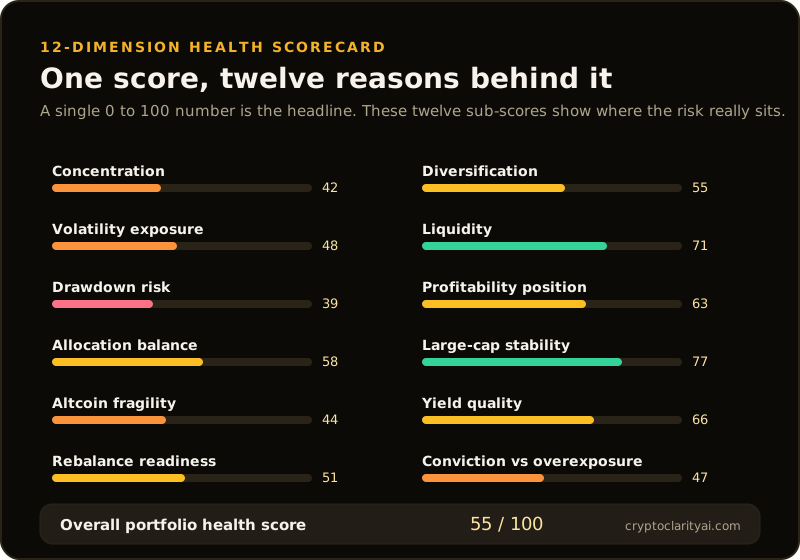
The gap between a free check and a full one is not the score. It is the explanation. A free result tells you that risk is high. A full result tells you exactly where it sits and what to do about it. Four things are commonly gated:
- The full breakdown across all 12 dimensions, not just the headline and a flag or two. Concentration, correlation, volatility exposure, liquidity, drawdown risk, and the rest each get their own sub-score.
- Every individual flag, so nothing is hidden behind a summary. A free view might show your worst issue and stop. The full view lists all of them.
- The crash test in dollars, showing what a 30, 50, or 70 percent drop does to your specific holdings, which you can preview on the crypto stress test page.
- A concrete fix-it plan, the ordered set of changes that would move the score, rather than a generic "reduce risk" nudge.
None of that changes the free score. It changes whether you know what to do next.
An honest comparison
Say two people both run the free checker. The first gets a score of 78 with one minor flag. For them, free is the right answer. The picture is healthy, the single flag is easy to understand, and paying for more detail would not change a single decision. They should re-run it after their next few trades and move on.
The second gets a score of 41 with a note that concentration and correlation are both poor. They can see there is a problem, but not the shape of it. Which coin is the worst offender. How much to trim. Whether the alts are the real issue or just the largest position. Would a bigger stablecoin buffer move the number more than a trim. This is the case where the full breakdown earns its keep, because the cost of guessing wrong on a five or six figure portfolio dwarfs the price of the answer.
That is the whole decision rule. Free tells you if you have a problem. The full score tells you how to fix it. Pay when the second question is the one you actually need answered.
Why the pricing is simple
Crypto Clarity AI keeps the offer deliberately plain. The demo and the headline score are free. The full breakdown, every flag, the crash test, and the fix-it plan are a one-time $12 launch price (regularly $19) that unlocks lifetime access. There is no subscription, no monthly fee, and no upsell ladder. You pay once, and you can re-run the full score whenever your portfolio changes. You can see exactly what is included on the pricing page, and read what the twelve dimensions measure on the 12 dimensions page.
This is educational information about portfolio structure, not financial advice, and no tool can promise a specific outcome. What a good risk checker can do is replace a vague worry with a clear, ranked list of what is risky and what to change.
How to use free the smart way
Start free every time. Enter your holdings by hand on the free demo or the portfolio risk calculator, read the headline score, and note the flags. If the score is healthy, you are done, and you have spent nothing. If the score is poor and you cannot tell why, that is your signal that the detail is worth a one-time $12 launch price (regularly $19). Either way, you never connect a wallet, and you can check as often as you like.
The best free crypto portfolio risk checker is the one you actually run. Run it today, and let the result, not a sales page, decide whether you need the full breakdown.
Frequently asked questions
- Is there a genuinely free crypto portfolio risk checker?
- Yes. You can get a real 0 to 100 risk score for free by entering your holdings manually, with no wallet connection and no payment. The free result shows your headline score and your biggest risk flags, which is enough to tell whether you have a problem worth fixing.
- What does a free risk checker usually leave out?
- Free checks tend to show the headline number and the top one or two issues. What is commonly gated is the full breakdown across all 12 dimensions, every individual flag, the crash test in dollars, and a specific fix-it plan. Those are the parts that tell you exactly what to change.
- When is paying worth it?
- If the free score is healthy, free is enough and you can re-run it any time. If the free score is poor and you cannot tell why, the full breakdown is worth a one-time 19 dollars, which unlocks lifetime access rather than a subscription.
Run the free risk checker first, then decide if the full score is worth it.
Free portfolio health score across 12 dimensions. No signup. Real fund-style math on your holdings.
